Transportation Planning
Understanding the 85th Percentile Rule: A Practical Guide Traffic Engineering
Learn how 85th percentile speeds guide traffic decisions and how continuous data helps cities validate requests, boost safety with Urban SDK
Traffic engineers rely on a wide range of tools, measurements, and methodologies to evaluate roadway safety. But among the most foundational metrics — and often the one that determines whether traffic calming or stop-control measures are warranted — is the 85th percentile speed.
For decades, transportation agencies across the United States have used the 85th percentile rule to understand driver behavior and make data-driven decisions. But while the method is widely accepted, it is also frequently misunderstood, misapplied, or questioned in urban environments where pedestrian activity, land use, and neighborhood expectations continue to evolve.
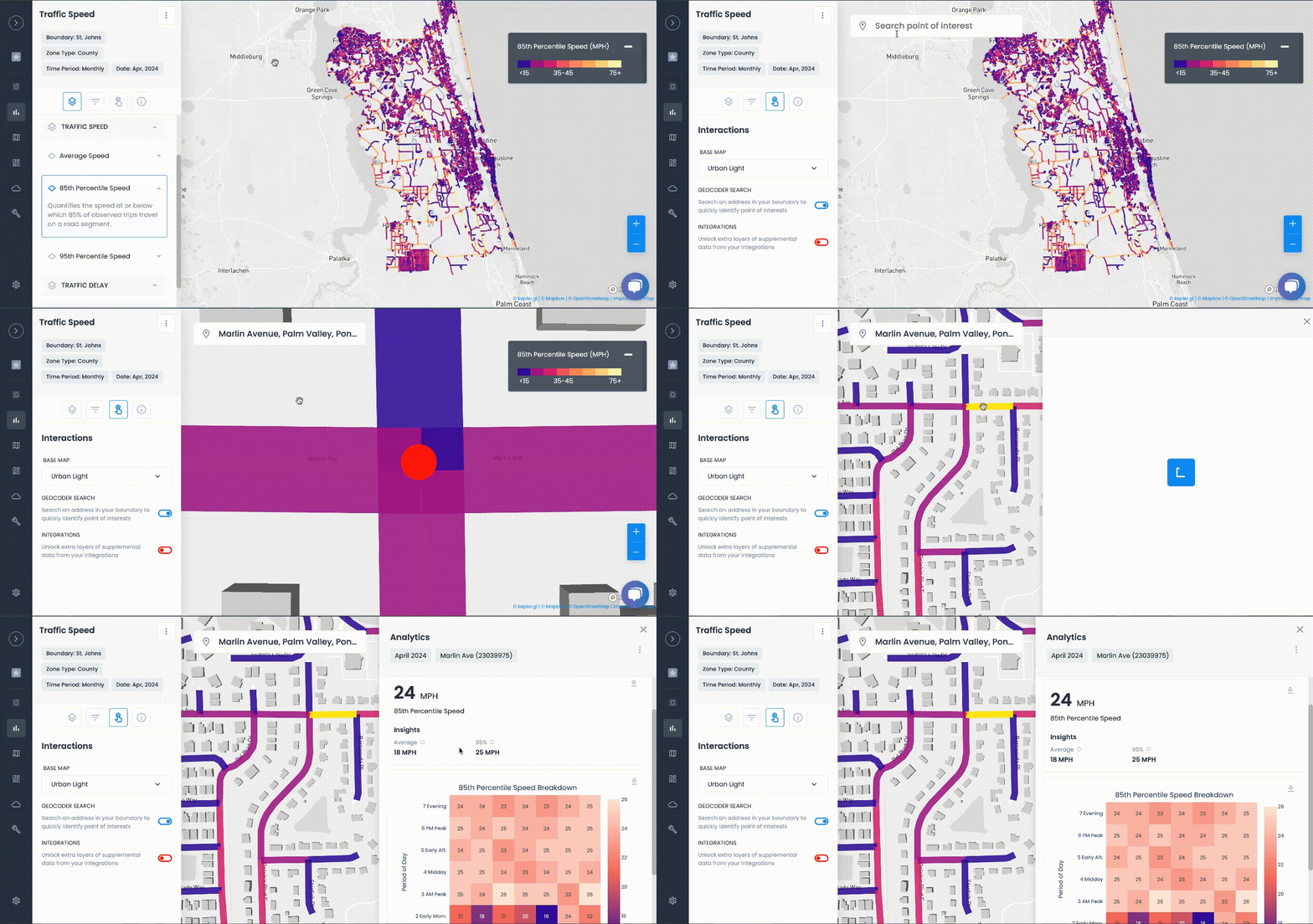
Today, cities face increasing pressure to validate public speeding complaints quickly, justify traffic calming decisions transparently, and manage high request volumes — all while working with limited staff. Platforms like Urban SDK now help municipalities access the data they need instantly, including the 85th percentile calculations that historically required days or weeks of field deployments.
A strong example comes from the City of El Cajon, California, where officials used Urban SDK to monitor 85th percentile speeds, validate traffic calming requests, and reduce reliance on external consultants.
This blog provides an in-depth, practical guide for traffic engineers who use the 85th percentile rule and want to understand how modern data sources improve accuracy, clarity, and decision-making.
What Is the 85th Percentile Speed Rule?
The 85th percentile speed is the speed at or below which 85% of drivers travel under free-flow conditions. In other words, it represents the speed chosen by the majority of “reasonable and prudent” drivers on a roadway.
The method originated in the mid-20th century, when traffic engineering research showed that:
- Most drivers naturally select speeds appropriate for the roadway
- Posted speed limits that match natural driver behavior result in safer conditions
- Roads designed and posted inconsistently with behavior can increase crash risk
The 85th percentile approach became a national standard and is still referenced by the MUTCD, FHWA, and state DOTs.
Why engineers use the metric
The 85th percentile is used because it:
- Reflects prevailing traffic behavior
- Minimizes differences between fast and slow drivers
- Helps determine whether a speeding complaint reflects typical behavior
- Provides a statistically defendable measure for traffic calming decisions
- Serves as an objective standard rather than subjective perception
Cities rely on the 85th percentile to determine whether residents’ concerns warrant engineering or enforcement action.
Understanding the “majority driver behavior” principle
Drivers subconsciously consider:
- Lane width
- Roadway curvature
- Sight distance
- Surrounding land use
- Surface condition
- Intersection density
- Perceived safety
The speed they choose — absent heavy congestion — reflects the roadway’s design more than posted limits.
The 85th percentile captures this behavior objectively.
How Cities Calculate the 85th Percentile Speed
Traditional hardware-based studies
Historically, cities deployed:
- Pneumatic tubes
- Radar trailers
- Lidar counters
- Temporary speed sensors
These devices gather:
- Speed
- Volume
- Peak periods
- Direction of travel
While effective, hardware studies come with limitations:
- They require staff time to deploy
- They collect data for only a short window
- They may be influenced by weather or unusual conditions
- They can delay decision-making for weeks
Continuous mobility datasets
Modern cities increasingly use continuous roadway data from platforms like Urban SDK, which provides:
- Daily speed metrics
- Real-world driver behavior
- 85th percentile calculations across long time periods
- Comparison with historical behavior
- Time-of-day and weekday/weekend insights
El Cajon’s traffic team used Urban SDK to validate the 85th percentile speed on residential and collector streets, allowing staff to evaluate traffic calming requests quickly and accurately — without contracted traffic counts.
Differences in weekday vs weekend measurements
The 85th percentile can vary significantly between:
- Commuter-heavy weekdays
- Leisure-driven weekends
- School-year vs summertime
- Special events or tourism periods
For example:
- Weekday 85th percentile = 32 mph
- Weekend 85th percentile = 38 mph
Physical speed studies may capture only one of these behaviors.
Continuous data reveals the full picture.
When the 85th Percentile Should Be Used in Decision-Making
Traffic calming evaluations
Cities often rely on the 85th percentile to determine:
- Whether speeding is truly occurring
- Whether calming measures like humps, cushions, or narrowing are appropriate
- Whether engineering changes may be more effective than enforcement
El Cajon uses Urban SDK’s 85th percentile insights to determine if a location meets internal criteria for calming measures — replacing the need for immediate consultant studies.
Stop-control considerations
Some municipalities use the 85th percentile when assessing stop-sign warrants, especially when combined with:
- Traffic volume
- Crash history
- Gap availability
- Sight distance
Speed data helps determine whether high vehicle speeds reduce drivers’ ability to yield or stop safely.
Enforcement resource allocation
Police departments frequently request:
- Verified speeding data
- Time-of-day speeding patterns
- Priority locations for patrols
The 85th percentile helps agencies:
- Determine when enforcement is genuinely needed
- Avoid unnecessary deployments
- Coordinate targeted patrol strategies
Limitations and Critiques of the 85th Percentile Approach
While widely used, the 85th percentile rule is not without criticism — especially in modern, multimodal environments.
Urban vs suburban environments
Urban streets often include:
- Pedestrians
- Cyclists
- Transit stops
- High-density land use
In these areas, natural driver behavior isn’t always aligned with safety goals. Drivers may select speeds too high for vulnerable road users.
Roadway design concerns
Critics argue that:
- The 85th percentile may justify raising speed limits
- It can overlook roadway design flaws
- It may reinforce unsafe infrastructure conditions
This highlights why the 85th percentile should be one tool among many — not the sole decision-maker.
Pedestrian safety in mixed-use areas
High volumes of pedestrians change the safety context dramatically.
In these areas, cities should supplement the 85th percentile with:
- Crash data
- Conflict analysis
- Sight distance studies
- Pedestrian volume counts
- Land use assessment
Urban SDK helps cities analyze these additional layers by pairing speed data with traffic volume and roadway context.
How Modern Data Improves 85th Percentile Accuracy
Larger datasets = more reliable speed profiles
Continuous data dramatically improves statistical validity:
Physical study:
- 3–5 days
- 2,000–5,000 vehicles
Continuous monitoring:
- 30–365 days
- Hundreds of thousands of data points
Bigger sample = stronger engineering justification.
Real-time vs static measurements
Static measurements can be skewed by:
- Construction
- Holidays
- Weather
- School events
- Outlier drivers
Continuous datasets show normal behavior, peak behavior, and long-term behavior — side by side.
High-volume request cities benefit most
Cities facing large numbers of speed and traffic calming requests often struggle with:
- Backlogs
- Staff time constraints
- Consultant scheduling delays
Urban SDK eliminates these bottlenecks by giving staff instant access to:
- 85th percentile speeds
- Volume data
- Time-of-day variation
- Seasonal patterns
This improved efficiency is a major benefit in helping traffic divisions process more requests internally.
Conclusion
The 85th percentile rule remains one of the most important and reliable tools in traffic engineering — but its value depends on having accurate, continuous, and representative data behind it. With modern mobility datasets, cities can go far beyond short study windows and rely on a much larger sample of real driver behavior to support traffic calming, stop-control evaluations, enforcement decisions, and resident communication.
Urban SDK gives municipal traffic teams the ability to analyze 85th percentile speeds instantly, validate requests quickly, and make transparent, defensible decisions without waiting for field deployments or consultants. As demonstrated by the City of El Cajon, continuous data empowers staff to work more efficiently, respond with confidence, and create safer, more informed communities.
Frequently Asked Questions
1. What is the 85th percentile speed and why is it important?
The 85th percentile speed is the speed at or below which 85% of drivers travel under free-flow conditions. It is widely used to understand typical driver behavior and determine whether traffic calming or speed limit adjustments are appropriate.
2. How do cities calculate the 85th percentile speed?
Cities traditionally use radar counters or pneumatic tubes, but continuous mobility datasets now provide automatic 85th percentile calculations without field deployments. Urban SDK delivers these insights instantly for any roadway.
3. Why is the 85th percentile used in traffic engineering?
The metric reflects how most “reasonable and prudent” drivers naturally behave. It helps minimize speed variation, identify real speeding problems, and support defensible engineering decisions.
4. Is the 85th percentile rule still valid in urban environments?
Yes — but it should be used alongside other data such as crash history, pedestrian activity, land use, and roadway context. Dense urban streets often require additional safety considerations beyond driver behavior alone.
5. What are the limitations of relying solely on the 85th percentile?
On pedestrian-heavy or mixed-use streets, drivers may travel faster than what feels safe. The 85th percentile can overlook pedestrian safety needs, roadway design issues, or context-specific risks.
6. How does continuous data improve 85th percentile accuracy?
Continuous monitoring captures hundreds of thousands of speed points over weeks or months, avoiding the limitations of short 3–5 day studies. This provides a more reliable, representative speed profile.
7. When should the 85th percentile be used for traffic calming decisions?
Cities often use it to confirm whether speeding is widespread or isolated, determine if calming measures are justified, and evaluate whether roadway design aligns with actual driver behavior.
8. Can police departments use 85th percentile data for enforcement planning?
Yes. Verified speed data helps police target enforcement where it’s needed most, avoid unnecessary patrols, and schedule officers during the hours when speeding actually occurs.
9. How do weekday and weekend speeds affect the 85th percentile?
Speed patterns often differ between commuter-heavy weekdays and leisure-driven weekends. Continuous data helps cities understand these variations and avoid misleading conclusions from short-term studies.
10. How can cities get faster access to 85th percentile data?
Using Urban SDK, staff can instantly review 85th percentile speeds, time-of-day patterns, and long-term trends without waiting for hardware deployment or consultant analysis.
Explore Urban SDK: https://www.urbansdk.com
Contact the team: https://www.urbansdk.com/contact

TRAFFIC ENFORCEMENT FEATURES
80% of citizen complaints
are a perception problem
Urban SDK provides precise hourly speed data to evaluate complaints and deploy resources efficiently for the greatest impact to public safety.
Urban SDK provides precise hourly speed data to evaluate complaints and deploy resources efficiently for the greatest impact to public safety.

Target Speeding
Identify hot spots, validate monthly speeding trends and monitor vulnerable areas like school zones.

Improve Safety
Crash and citations location information to compare speed trends month over month

Fast Response
Respond to citizen complaints sooner with address search and exportable reporting

Deploy Assets
Generate maps for traffic enforcement by time of day, location or division to deploy officers to known problem areas.
RESOURCES
Customer Success
See how public sector leaders succeed with Urban SDK.


WEBINAR
Identify speeding and proactively enforce issues
See just how quick and easy it is to identify speeding, address complaints, and deploy officers.