Traffic Calming
A Modern Framework for Handling Resident Speeding Complaints With Data Transparency
See how cities use real-time speed data to resolve speeding complaints faster, boost transparency, and build community trust with Urban SDK.
Speeding complaints are one of the most common issues residents report to their local governments. As communities grow and traffic volumes increase, residents become more conscious of how vehicles behave on neighborhood roads. With rising expectations for faster communication, cities must provide clear, data-backed responses — not rely on slow, outdated processes.
To meet today’s demand for transparency and efficiency, municipalities are turning to modern traffic platforms. Urban SDK, which helps validate speeding concerns instantly using continuous roadway data. This shift not only strengthens public trust but also enables agencies to respond more accurately and efficiently.
A strong example of this transformation is Manheim Township, Pennsylvania, a community that reduced speeding complaint resolution times from weeks to hours by adopting Urban SDK.
Modern communities expect data-driven transparency — and this article explains exactly how cities can achieve it.
Why Speeding Complaints Are Increasing in Modern Communities
Growth, traffic volume, and rising resident expectations
As cities expand, traffic naturally increases. Neighborhoods that once felt quiet begin to experience more trips, school traffic, and commuter flow. With this change, residents become more aware — and often more sensitive — to vehicle speeds.
At the same time, people expect faster, clearer communication from city staff. Long delays or vague responses no longer meet public expectations.
Why perception vs. reality creates tension
Frequently, residents perceive vehicles as speeding due to:
- Loud engine noise
- Larger vehicle size
- Roadway design amplifying sound
- Limited pedestrian sight distance
- An outlier speeding, rather than a trend
Without real data, it becomes difficult to differentiate between perception and actual speeding behavior. This leads to frustration on both sides.
Traditional reactive workflows and their limitations
Historically, the process for verifying complaints looks like this:
- Resident submits report
- Staff schedules manual speed study
- Equipment is deployed
- Counters collect several days of data
- Staff retrieve and analyze results
This takes weeks (at best), creates departmental backlogs, and often provides only a limited snapshot of behavior.
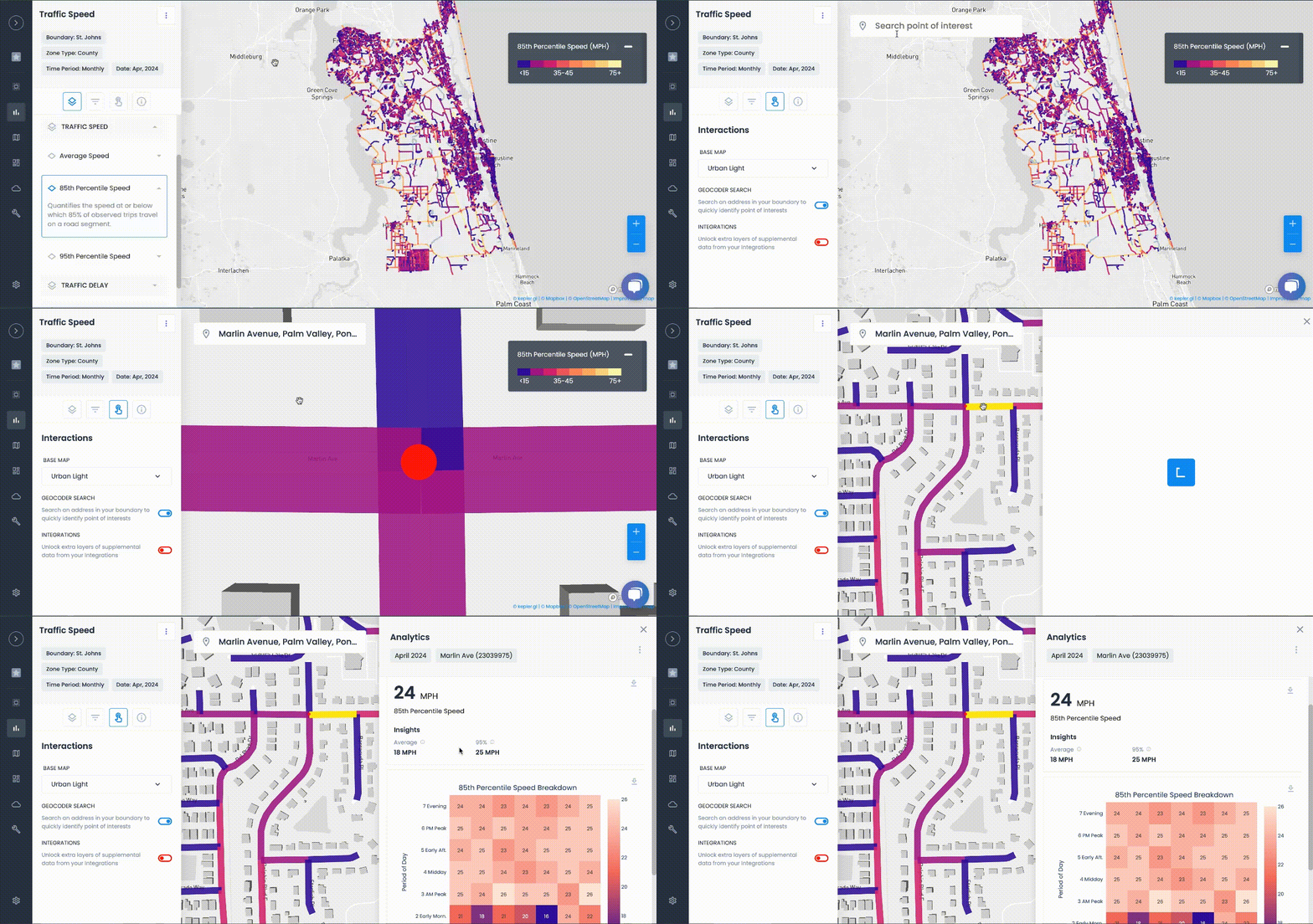
Urban SDK helps eliminate these issues by supplying cities with continuous, verified speed data for any roadway — instantly.
The Need for a Modernized Speeding Complaint Framework
Why cities struggle to validate complaints quickly
Many municipalities receive dozens to hundreds of speeding complaints per year. But limited staff, outdated tools, and reliance on field equipment slow the entire workflow.
Lack of real-time or verified data
Without continuous monitoring, staff must physically deploy equipment for every concern — even when speeds may be normal. This inefficiency was one of Manheim Township’s biggest challenges before adopting Urban SDK.
Impact on resident trust and satisfaction
Residents want quick answers. When the validation process takes multiple weeks, public trust can erode. Transparent, data-backed communication helps rebuild confidence and clarifies misunderstandings.
Key Components of a Transparent Data-Driven Complaint System
Instant access to accurate speed data
Urban SDK provides:
- Daily and historical speed trends
- 85th percentile speeds
- Time-of-day speeding patterns
- Customizable road segment analysis
Staff no longer need to visit the field to validate every complaint.
Clear communication with residents
With verified data, agencies can confidently respond with factual insights:
- “On average, speeds are within the posted limit.”
- “Speeding increases during late evenings.”
- “Here is how speeds have changed over the past 30 days.”
Urban SDK’s dashboards make these conversations easier and more transparent.
Workflow alignment between engineering and police
Speeding complaints often involve multiple departments. A centralized system ensures:
- Engineering reviews detailed data
- Police deploy enforcement based on real hotspots
- Public works considers traffic calming strategies
- Communications teams share accurate public updates
Visual reporting for public communication
Charts, heat maps, and speed profiles help residents understand speed behavior instantly — without needing technical expertise.
Benefits of Using Verified Traffic Data in Complaint Resolution
Faster response times
Rather than waiting weeks for a field study, staff can review Urban SDK speed data within minutes.
This is exactly how Manheim Township accelerated its workflow.
Reduced reliance on physical speed studies
Physical equipment becomes necessary only when validating construction changes or confirming unusual patterns. Most complaints can be resolved using continuous digital data.
Improved internal decision-making
With accurate, long-term data, staff can:
- Prioritize true hotspots
- Avoid chasing isolated perception-based complaints
- Deploy resources more efficiently
Reduced misinformation and speculation
Data eliminates misunderstandings and helps shift conversations from opinion-based to evidence-based.
Best Practices for Cities Modernizing Their Complaint Process
Standardizing complaint intake
Use a structured form that collects:
- Location details
- Time of concern
- Type of behavior observed
- Any relevant context
This ensures staff analyze complaints consistently.
Establishing data validation protocols
Before recommending enforcement or calming measures, staff should:
- Review historical speed patterns
- Analyze the 85th percentile
- Compare against speed limits
- Identify peak speeding windows
- Validate whether the complaint aligns with long-term behavior
Urban SDK enables this step-by-step review in a single platform.
Integrating real-time data platforms
Cities like Manheim Township have demonstrated that adopting Urban SDK dramatically improves complaint handling by eliminating manual deployments and providing instant clarity.
Conclusion
A more transparent, data-driven approach strengthens resident trust. When cities rely on verified speed data, conversations with residents become clearer, more constructive, and far more credible.
Cities can also resolve citizen complaints faster and more effectively with Urban SDK, which empowers municipalities to modernize their entire complaint workflow — reducing backlog, improving communication, and ensuring resources are deployed where they matter most.
Frequently Asked Questions
1. How can cities verify if residents’ speeding complaints are accurate?
Cities can verify complaints by using continuous speed data rather than waiting for manual speed studies. Urban SDK provides real-time and historical speed trends to instantly confirm whether persistent speeding is actually happening.
2. What is the fastest way to respond to speeding complaints?
The fastest method is to use digital traffic data tools that offer immediate speed analysis. This removes the need for scheduling field studies and allows staff to validate concerns in minutes instead of weeks.
3. Why do residents often perceive cars as speeding even when they aren’t?
Perception issues commonly stem from loud engines, large vehicle sizes, poor visibility, and roadway design, and one-offs (as opposed to a trend of speeding). Verified data helps distinguish perception from actual speeding behavior, reducing conflict and confusion.
4. What is the 85th percentile speed and why does it matter for traffic complaints?
The 85th percentile speed represents the speed at or below which 85% of vehicles travel. It’s a key traffic engineering metric used to understand typical driver behavior and determine whether true speeding is occurring.
5. Do cities still need physical speed studies if they use a data platform?
Yes, but they can be more tactical. If officials notice a trend, they can deploy more resources for a study (as opposed to conducting studies for every resident complaint). Physical studies can also be used in special cases, such as construction changes or one-off events. Most complaints can be resolved using continuous digital data, significantly reducing field deployments.
6. How can real-time traffic data improve communication with residents?
Real-time speed insights allow staff to provide clear, evidence-based responses like:
- When speeding occurs
- How often it happens
- Whether speeds match posted limits
This transparency strengthens public trust.
7. How do traffic data platforms help police and engineering teams?
Shared data helps align decisions across departments. Engineering reviews patterns, police focus enforcement on true hotspots, and communications teams provide accurate updates to residents.
8. What tools do cities use to track speeding in neighborhoods?
Many cities now use cloud-based platforms to monitor speeds continuously. These tools replace outdated counters and deliver dashboard insights instantly.
9. Can cities reduce speeding complaint backlogs?
Yes. By using verified roadway data instead of manual request handling, cities clear backlogs faster, avoid unnecessary deployments, and make decisions based on real evidence.
10. How can cities get started with Urban SDK?
Municipalities can explore features or request a demo here: Explore Urban SDK | Contact the team
TRAFFIC ENFORCEMENT FEATURES
80% of citizen complaints
are a perception problem
Urban SDK provides precise hourly speed data to evaluate complaints and deploy resources efficiently for the greatest impact to public safety.
Urban SDK provides precise hourly speed data to evaluate complaints and deploy resources efficiently for the greatest impact to public safety.

Target Speeding
Identify hot spots, validate monthly speeding trends and monitor vulnerable areas like school zones.

Improve Safety
Crash and citations location information to compare speed trends month over month

Fast Response
Respond to citizen complaints sooner with address search and exportable reporting

Deploy Assets
Generate maps for traffic enforcement by time of day, location or division to deploy officers to known problem areas.
RESOURCES
Customer Success
See how public sector leaders succeed with Urban SDK.


WEBINAR
Identify speeding and proactively enforce issues
See just how quick and easy it is to identify speeding, address complaints, and deploy officers.