Road Safety
Speeding Perception vs. Reality: What Data Reveals About Neighborhood Traffic Concerns
Residents often misjudge speeding; continuous data helps cities verify concerns, spot true hotspots, and respond faster with Urban SDK.
Speeding is one of the most common traffic-related concerns residents report to their local governments. Whether through online forms, phone calls, neighborhood meetings, emails, or conversations with city staff, people frequently express fear that drivers are traveling too fast on their streets. But while these concerns are often genuine and well-intentioned, they don’t always reflect what is truly happening on the roadway.
The reality is that perception and actual speed data often differ significantly.
This does not mean residents are wrong — it simply means that human perception is influenced by many factors: noise, vehicle size, road design, past experiences, and visual cues. Cities need a dependable way to validate these concerns objectively and communicate their findings transparently.
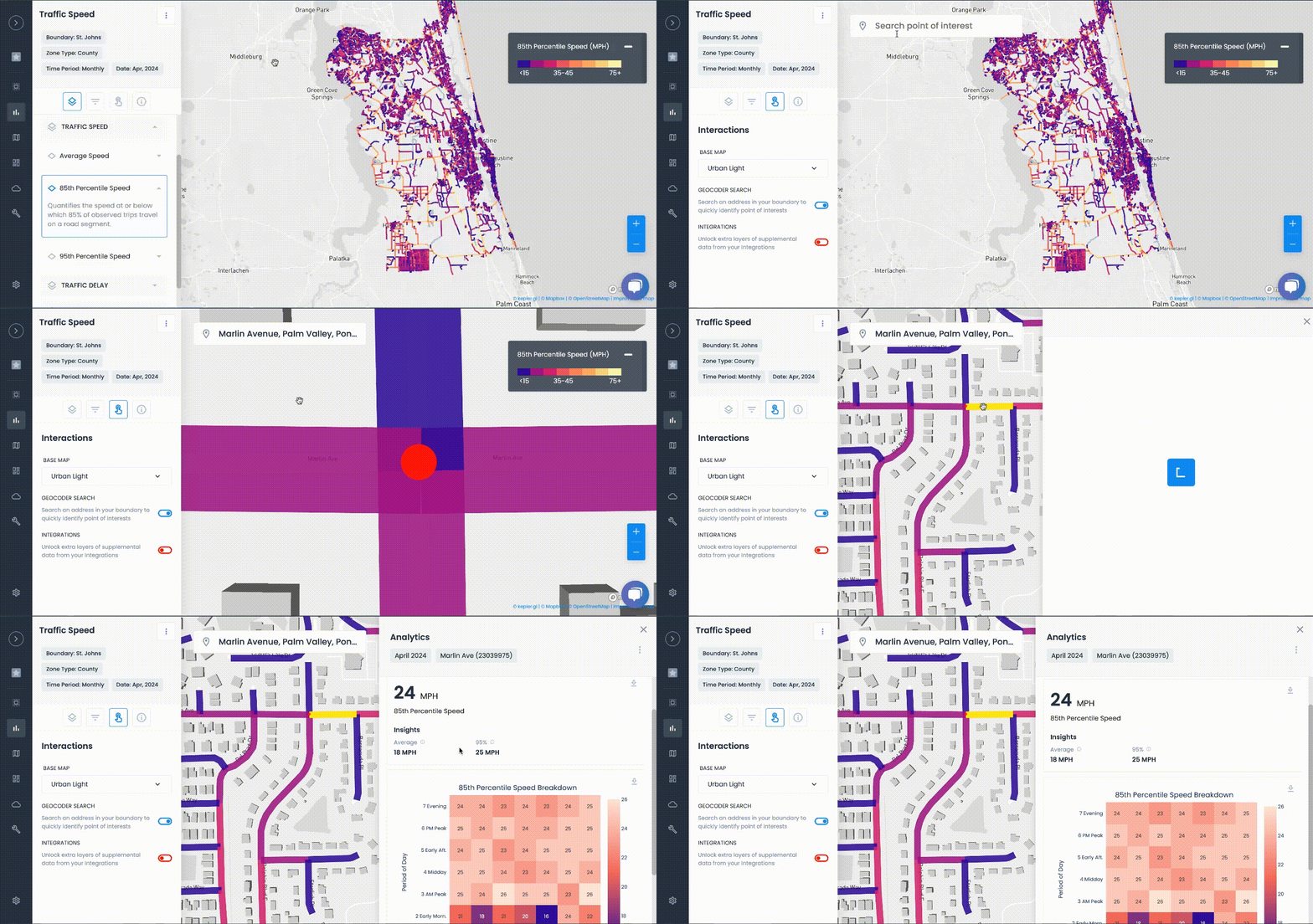
Modern mobility datasets, continuous speed monitoring, and Urban SDK now give cities precise insights that bridge the gap between perception and reality. A strong example comes from Manheim Township, Pennsylvania, where Urban SDK helped staff verify resident speeding concerns instantly — without waiting weeks for physical speed studies.
This blog explores why perception and reality often diverge, how data clarifies the truth, what patterns cities see in residential neighborhoods, and how municipalities can use verified insights to improve safety and trust.
Why Residents Often Perceive Speeding Differently Than Data Shows
Residents reporting speeding are usually acting out of care for their community, their children, and the safety of others. However, human perception is not a precise measurement tool. Several environmental and psychological factors shape what people think they see — and these influences often contribute to overestimation of vehicle speeds.
Let’s break down the key drivers of perception.
Noise, vehicle type, and roadway acoustics
Noise plays a major role in how fast a vehicle seems to be traveling. For example:
- Large pickup trucks produce deeper engine noise
- Motorcycles create louder, sharper sound signatures
- Modified exhaust systems mimic “high-speed” behavior even at legal speeds
Even electric vehicles can produce sudden tire noise that catches residents off guard.
If a street has a narrow roadway, houses close to the curb, or noise-reflective surfaces (fences, brick walls), sound becomes amplified — creating the impression of excessive speed.
Perception: “Cars are flying down the road.”
Reality: Data often shows speeds just slightly above or even below the limit.
Pedestrian visibility and proximity to the road
A motorist driving at 25 mph may feel normal behind the wheel —
but to a parent walking with a stroller on a narrow sidewalk, it can feel dangerously fast.
Factors that magnify perception:
- Close proximity of pedestrians to traffic
- Limited sidewalks
- Poor lighting
- Hills or curves reducing sight distance
- Parked cars obstructing views
Residents respond emotionally and instinctively because they feel unsafe, not necessarily because speeds are objectively high.
Bias from isolated incidents
A single loud car, a reckless driver, or a moment of high traffic volume can shape a resident’s long-term perception.
This is known as availability bias — humans remember dramatic incidents more vividly than normal conditions.
Cities often discover through Urban SDK that:
- An isolated event caused a flood of complaints
- Normal behavior is actually compliant
- The speeding problem exists, but only at specific hours
This is exactly what Manheim Township found when implementing the Urban SDK. They discovered that some locations received multiple complaints based on perception alone — yet the speed distribution was within reasonable limits. Other roads, however, showed peak-hour speeding patterns that aligned with true hotspots.
How Accurate Speed Data Helps Clarify the Truth
The only fair and consistent way to determine whether drivers are speeding is to use real, verified data. Continuous monitoring removes guesswork and helps cities respond with confidence.
Urban SDK makes this process extremely simple by giving cities instant access to:
- Average speed
- Speed distribution
- 85th percentile speed
- Volume patterns
- Time-of-day speeding behavior
- Historical trends
Let’s break down the most important data points.
Verifying average speed
Average speed gives a high-level understanding of driver behavior. If average speeds stay within 2–3 mph of the posted limit, it often indicates normal traffic flow.
However, averages alone can hide extreme outliers, which is why the next metric matters even more.
Evaluating 85th percentile behavior
The 85th percentile is one of the most reliable metrics in traffic engineering. It shows the speed at or below which 85% of vehicles travel. This helps cities determine:
- Is the majority of traffic behaving as expected?
- Are drivers collectively treating the road like a faster corridor?
- Do outliers represent a few reckless drivers or widespread behavior?
For example:
- If the posted limit is 25 mph
- And the 85th percentile is 33 mph
→ This signals a broader design or enforcement issue.
Urban SDK calculates the 85th percentile instantly for any road.
Identifying peak speeding times
One of the most important insights is when speeding happens. Data often reveals patterns such as:
- Early morning speeding (shift workers, cut-through traffic)
- Late-night speeding (low volume encourages higher speeds)
- Weekend spikes near recreation areas
- After-school patterns in neighborhoods
Cities using Urban SDK can view these trends hour-by-hour.
This was especially helpful for Manheim Township officers. Instead of guessing when to enforce, they reviewed Urban SDK’s hourly data to identify the exact windows when speeding was most common — making enforcement more effective and efficient.
Common Patterns That Data Reveals in Residential Areas
After helping many cities analyze residential speeding concerns, several consistent themes appear across neighborhoods. These patterns demonstrate why continuous data is so important.
Perception-driven streets vs. actual hotspots
Cities regularly encounter situations where:
- Streets with high perception of speeding show normal speeds
- Streets with low or no complaints show real speeding problems
This mismatch happens because the loudest complaints do not always reflect the most dangerous locations.
Urban SDK helps cities prioritize resources based on evidence rather than volume of complaints.
Seasonal or time-of-day variations
Speeding is rarely constant. It fluctuates with:
- School schedules
- Weather (snow slows traffic; clear days increase speed)
- Holiday travel
- Tourism seasons
- Peak commuting times
- Summer recreational traffic
Physical speed studies cannot capture these variations because they represent such limited sample windows.
Continuous monitoring shows:
- Patterns over weeks
- Trends across months
- Year-over-year changes
This leads to more informed decision-making.
Where complaints align with data
There are also many cases where resident perception does match reality.
In these cases, data helps cities:
- Act faster
- Deploy enforcement confidently
- Implement calming measures
- Communicate decisions clearly
Manheim Township discovered several roads where speed data strongly supported resident concerns. Urban SDK allowed the Township to justify next steps with transparent evidence.
Best Practices for Communicating Data Back to Residents
Even when data contradicts perception, cities can maintain strong relationships with residents through thoughtful, transparent communication.
Urban SDK helps cities present data in a way that is simple, visual, and accessible — reducing confusion and eliminating technical barriers.
Visual tools for easy interpretation
Charts and heat maps are much easier for residents to understand than raw numbers. Urban SDK provides:
- Speed distribution graphs
- Time-of-day charts
- Color-coded maps
- Trendlines
- Clear speed-limit comparisons
These visuals turn complex data into storytelling tools that help residents understand what’s truly happening.
Crafting clear explanations
Cities should always communicate findings in a friendly, factual way. For example:
- “The data shows most vehicles are within 2 mph of the posted limit.”
- “We did observe a speeding spike from 10–11 PM, and we will adjust patrol schedules accordingly.”
- “Your concern is valid — here’s the speeding trend we found.”
Residents appreciate transparency, even when the data contradicts their expectations.
Supporting decisions with evidence
Data helps cities confidently explain:
- Why enforcement is or isn’t needed
- Whether calming measures are justified
- What next steps the city will take
- Why a particular road isn’t considered a hotspot
Using evidence removes emotion from the conversation and promotes trust.
How Cities Can Use Insights to Improve Safety
Ultimately, verifying perception with data is only the first step. Cities can use these insights to actively make neighborhoods safer and more responsive.
Deploying enforcement only where needed
Police officers are often stretched thin. Prioritizing data-backed hotspots helps:
- Improve officer efficiency
- Target unsafe behavior
- Avoid unnecessary deployments
- Justify enforcement decisions to leadership and the public
Urban SDK’s real-time insights significantly helped Manheim Township officers coordinate enforcement schedules with real speeding patterns.
Targeted traffic calming
When speeding is verified, cities can consider:
- Speed humps
- Raised crosswalks
- Road diets
- Curb extensions
- Enhanced signage
- Pavement markings
- Digital speed feedback signs
Data helps justify these investments and determine the most appropriate solutions.
Enhanced resident trust
Transparent communication reinforces the message:
“We take your concerns seriously, and we use real data to make decisions.”
This approach:
- Reduces frustration
- Strengthens community relationships
- Increases public confidence in city processes
- Encourages residents to continue reporting issues
Manheim Township reported improved public satisfaction after adopting Urban SDK because responses became faster, clearer, and strongly evidence-based.
Conclusion
Speeding perception and actual driver behavior rarely match perfectly — yet both matter when evaluating neighborhood safety. Perception reflects a resident’s lived experience, while speed data reveals objective roadway behavior. Urban SDK brings these two perspectives together by giving cities continuous speed monitoring, instant validation, and clear insights into real traffic patterns.
With accurate data, municipalities can respond to concerns more confidently, identify true hotspots, target enforcement where it’s needed, and communicate with residents in a transparent, evidence-based way. As Manheim Township’s experience shows, using verified insights strengthens trust, accelerates response times, and ultimately helps cities build safer, more informed communities.
Frequently Asked Questions
1. Why do residents often perceive cars as speeding when data shows otherwise?
Perception is influenced by noise, vehicle size, road design, visibility, and past experiences. These factors can make normal speeds feel much faster, especially in narrow residential areas or near pedestrians.
2. How can cities determine whether drivers are actually speeding?
The most reliable method is to analyze continuous speed data. Urban SDK provides verified speed distributions, averages, and 85th percentile behavior so cities can instantly confirm whether speeding is happening.
3. What is the 85th percentile speed and why is it important?
The 85th percentile represents the speed at or below which 85% of drivers travel. It’s one of the most trusted traffic engineering metrics for determining whether a roadway encourages higher speeds or if behavior is generally compliant.
4. How can data help cities differentiate perception from reality?
Speed data reveals real patterns — such as time-of-day speeding spikes, weekend surges, or seasonal changes — helping cities identify true hotspots while also understanding where speeds are actually within limits.
5. Why do isolated incidents lead to frequent speeding complaints?
Residents tend to remember dramatic events like loud cars, reckless drivers, or one speeding outlier. This “availability bias” creates lasting perception even when the majority of traffic is compliant.
6. How does continuous monitoring improve traffic enforcement?
Continuous data helps police determine when and where speeding actually occurs. This allows departments to target enforcement during peak windows and avoid unnecessary deployments.
7. Can physical speed studies still be used?
Yes — cities may still use them for special engineering projects, construction changes, or validation needs. However, most complaint-driven studies can be resolved instantly using Urban SDK’s continuous monitoring.
8. How should cities communicate data to residents when perception doesn’t match reality?
Clear visuals, time-of-day charts, and simple explanations help residents understand real traffic behavior. Transparent communication reinforces trust even when data contradicts initial assumptions.
9. How can cities use speed data to support traffic calming decisions?
When data confirms a speeding issue, cities can justify measures like speed humps, curb extensions, signage improvements, or targeted enforcement — ensuring resources are used where they’ll have true impact.
10. How quickly can cities respond to speeding complaints with Urban SDK?
Instead of waiting weeks for physical studies, staff can view verified speed profiles in minutes. This drastically reduces backlogs and improves resident satisfaction.

TRAFFIC ENFORCEMENT FEATURES
80% of citizen complaints
are a perception problem
Urban SDK provides precise hourly speed data to evaluate complaints and deploy resources efficiently for the greatest impact to public safety.
Urban SDK provides precise hourly speed data to evaluate complaints and deploy resources efficiently for the greatest impact to public safety.

Target Speeding
Identify hot spots, validate monthly speeding trends and monitor vulnerable areas like school zones.

Improve Safety
Crash and citations location information to compare speed trends month over month

Fast Response
Respond to citizen complaints sooner with address search and exportable reporting

Deploy Assets
Generate maps for traffic enforcement by time of day, location or division to deploy officers to known problem areas.
RESOURCES
Customer Success
See how public sector leaders succeed with Urban SDK.


WEBINAR
Identify speeding and proactively enforce issues
See just how quick and easy it is to identify speeding, address complaints, and deploy officers.